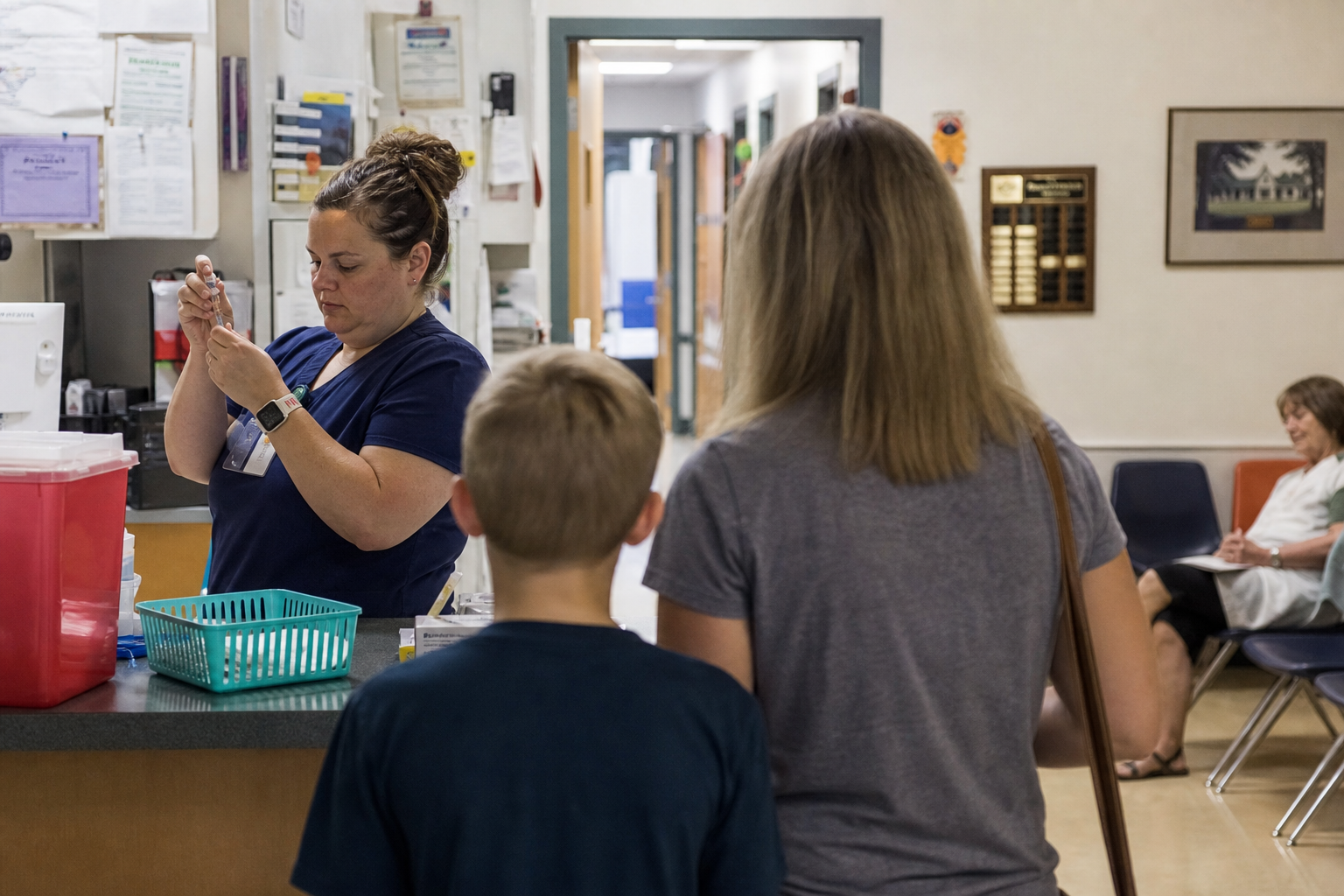
MADISON, Wis. — Wisconsin’s measles outbreak has jumped from a pair of cases earlier this week to 15 confirmed infections, with six more listed as probable, the state Department of Health Services said Thursday. Officials now believe the virus is circulating inside southwestern communities, not arriving only with travelers.
Thirteen of the newly confirmed cases were in Iowa County. The first two this week were an Iowa County resident and a Lafayette County resident. Dr. Ryan Westergaard, chief medical officer in the DHS Bureau of Communicable Diseases, said the agency is working with county health departments and the Centers for Disease Control and Prevention.
“The majority of cases in this outbreak, similar to the large majority of cases in the overall United States outbreak, are occurring among unvaccinated people,” Westergaard said.
Local spread, not just travel
Health workers have not named any public places where bystanders were exposed. They are still interviewing patients to map contacts, a process Westergaard said will run for weeks. What raised the alarm, he said, is that the latest burst involved people who had not left the state.
“That increases our level of concern a bit because that means that there is transmission happening in Wisconsin and there could be and likely are people who have been exposed that we don’t know of yet,” he said.
A DHS dashboard shows about 60 percent of Wisconsin’s measles cases this year are in people 17 or younger. Three of those infected were younger than 4. Of 23 confirmed or suspected cases tied to the current count, all but one person was unvaccinated. No hospitalizations from this cluster had been reported as of Thursday.
A national surge into school season
The CDC has recorded 2,465 measles cases nationwide in 2026, the most in 35 years and already above last year’s full-year total of nearly 2,300. Wisconsin logged 36 cases in 2025. This year’s first Wisconsin cases, in Dane and Waukesha counties, were linked to international travel.
Measles can linger in air or on surfaces for up to two hours after an infected person coughs or sneezes. The CDC estimates that 9 in 10 unprotected people will catch it after close contact. Two doses of measles vaccine are about 97 percent effective; adults born before 1957 are generally treated as immune.
Officials asked residents to check the Wisconsin Immunization Registry or call a clinician, stay home if they have fever, cough, runny nose, red eyes or a spreading rash, and phone ahead before walking into a clinic so staff can isolate airborne cases.
The timing is awkward. Children go back to class this month and next. On Monday, President Donald Trump signed an order calling for combination shots, including measles-mumps-rubella, to be split into single-disease doses. DHS Secretary Kirsten Johnson said the order does not change Wisconsin’s advice and that the agency still backs the childhood schedule used by the American Academy of Pediatrics and the American Academy of Family Physicians.
“Health professionals and parents deserve accurate, credible information,” Johnson said. “There is no new scientific evidence that justifies changing recommendations that have, and continue to, protect children across the United States.”